NRT-Logo"/

Chart your course to success with a coxswain certification

MAR20324 Certificate II in Maritime Operations Coxswain Grade 1 Near Costal

Course
Duration

6 weeks

Delivery
Location

Official
Recognition

NRT-Logo"/

MAR20324 Certificate II in Maritime Operations Overview

The MAR20324 Certificate II in Maritime Operations (Coxswain Grade 1 Near Coastal) is your pathway to becoming a qualified Coxswain, authorised to operate small commercial vessels up to 12 metres in near coastal waters. Designed for those pursuing roles on passenger, fishing, or work vessels, this nationally recognised qualification builds the essential skills needed for safe and effective maritime operations.

Through practical, hands-on training, you’ll develop key capabilities in vessel navigation, handling, emergency response, and crew and passenger management. You’ll also gain experience operating vessels in Australia’s inshore waters, including inboard engines up to 500KW and unrestricted outboard engines. This AMSA-recognised qualification ensures you meet all required Units of Competency to work as a Coxswain in the near coastal zone.

General Entry Requirements:

  • Minimum Age: The minimum age for entry into this course is typically 16 years old. However, applicants under the age of 18 may require parental or guardian consent.
  • Medical Fitness: Medically Fit to Work at Sea: Candidates may need to complete a medical assessment to ensure they are fit for work at sea. This might include a seafarer’s medical certificate or a Marine Medical Examination to meet the health standards required for maritime work.
  • Language, Literacy, and Numeracy (LLN): Applicants should have basic literacy and numeracy skills to understand maritime terminology, complete assessments, and perform operational tasks. Some RTOs may assess your LLN levels prior to course enrolment.
  • Marine Radio Certificate (Optional but Recommended): While not always mandatory for enrolment, having a Marine Radio Operator Certificate (MROV) or similar qualifications may be beneficial, especially for those seeking to operate vessels in coastal areas and beyond. Some courses may offer this as part of the program.
  • Prior Experience (Recommended, but not mandatory): Although prior maritime experience is not always required, some practical experience in a maritime environment (e.g., working as a deckhand) may be beneficial. This experience can help learners understand the course content more effectively.
  • Logbook and Sea-Time Requirements: Before obtaining the Coxswain Grade 1 Near Coastal Certificate, candidates must log a certain number of sea hours. The specific requirements vary but typically involve a certain amount of supervised sea-time experience.
  • Driver’s License (Optional but recommended): Some training providers may recommend or require students to have a current driver’s license for practical exercises and to ensure the ability to travel to maritime training facilities.

The target audience for the MAR20324 Certificate II in Maritime Operations (Coxswain Grade 1 Near Coastal) generally includes:

  • Aspiring Mariners – Individuals looking to start or advance their careers in the maritime industry, particularly those who are interested in operating small commercial vessels such as fishing boats, ferries, or workboats.
  • Deckhands and Crew Members – Experienced deckhands or crew members who wish to step up into a leadership role and become qualified Coxswains, taking on more responsibilities in vessel operation and crew management.
  • Career Changers – People looking to transition into the maritime industry, including those from other industries who want to pursue a maritime career as a Coxswain.
  • School Leavers and Young Adults – Young people interested in maritime careers straight out of school, looking for an entry-level qualification to start their career at sea.

This course is ideal for anyone looking to gain practical, hands-on experience in vessel handling and take the first step towards a leadership role on the water.

Graduates of this course are eligible to apply for the Coxswain Grade 1 Near Coastal Certificate and pursue careers in:

  • Workboats and survey vessels
  • Vessel management and leadership roles

Upon successful completion of this course, participants will be able to:

Operate a Commercial Vessel Safely:

Demonstrate the ability to operate a commercial vessel up to 12 metres in length within near coastal waters, ensuring the safety of the vessel, crew, and passengers.

    • HLTAID011 - Provide First Aid
    • MARB027 - Perform basic servicing and maintenance of main propulsion unit and auxiliary systems
    • MARC037 - Operate inboard and outboard motors
    • MARC038 - Operate main propulsion unit and auxiliary systems
    • MARF028 - Follow procedures to minimise and fight fires on board a vessel
    • MARF029 - Meet work health and safety requirements
    • MARF030 - Survive at sea using survival craft
    • MARF060 - Apply basic survival skills in the event of vessel abandonment
    • MARH013 - Plan and navigate a passage for a vessel up to 12 metres
    • MARI003 - Comply with regulations to ensure safe operation of a vessel up to 12 metres
    • MARJ006 - Follow environmental work practices
    • MARK007 - Handle a vessel up to 12 metres
    • MARN008 - Apply seamanship skills aboard a vessel up to 12 metres

    Assessment Requirements for MAR20324 Certificate II in Maritime Operations (Coxswain Grade 1 Near Coastal)

    Practical Demonstrations:
    • Vessel Operation: Learners must demonstrate the ability to operate a commercial vessel (up to 12 metres in length) in a range of real-world scenarios, such as handling, mooring, and navigating in near coastal waters.
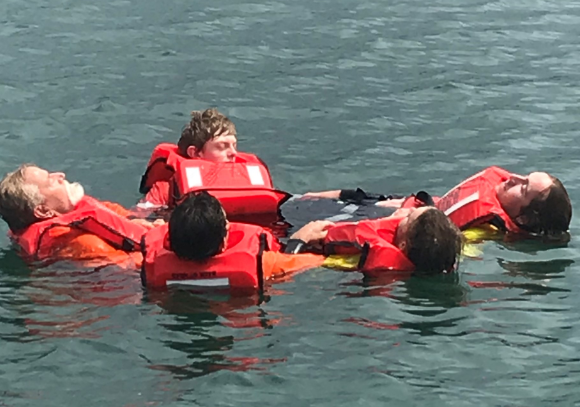
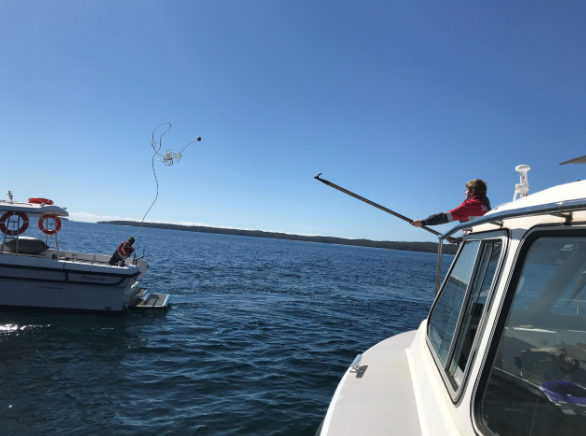
    • Emergency Procedures: Practical assessments of emergency response skills, including performing abandon ship drills, using life-saving equipment, and responding to fire or medical emergencies onboard.
    • Seamanship Skills: Demonstrating proficiency in basic seamanship tasks such as knot tying, anchoring, securing cargo, and handling ropes.


    Written Assessments:
    • Theory Tests: Learners are required to complete written tests covering theoretical knowledge in areas such as maritime regulations, navigation, weather interpretation, communication, and vessel maintenance.
    • Knowledge of Safety Protocols: Tests may assess the understanding of maritime safety regulations, personal protective equipment (PPE), and safety drills.
    • Environmental Practices: Learners may need to demonstrate their knowledge of environmental laws and sustainability practices on board.


    Logbook and Sea-Time Requirements:
    • Sea Time Documentation: To meet AMSA (Australian Maritime Safety Authority) requirements, students must log a certain number of sea hours, which are typically recorded in a logbook that tracks practical experience gained during the course or through additional work experience.

    The required sea-time is generally minimum 60 hours under supervision, and learners are expected to demonstrate the ability to perform Coxswain duties in a live working environment.

    Marine Radio Assessment:

    Learners may need to demonstrate proficiency in using marine communication systems, including performing radio checks and responding to distress calls, as part of their assessments for radio operations.

    Simulation Exercises:
    • Navigation and Weather Scenarios: Some training providers may use simulated exercises to assess learners’ decision-making skills in different sea conditions, such as interpreting weather forecasts and determining safe routes.
    • Emergency Response Simulations: Simulated emergency situations may be used to evaluate learners’ ability to respond to life-threatening conditions like fire, flooding, or man overboard situations.


    Observation and Feedback:
    • Trainer Observations: Throughout the course, trainers will observe and provide feedback on learners’ practical skills, teamwork, leadership, and communication abilities during training exercises and onboard activities.
    • Peer Assessments: In some cases, peer feedback may also form part of the assessment, especially when managing crew or passengers during training simulations.


    Completion of Practical Projects:

    Learners may be required to complete specific maritime projects, such as preparing voyage plans, ensuring vessel safety, or completing maintenance tasks on vessels as part of their final assessments.

    Upon successful completion of the MAR20324 Certificate II in Maritime Operations (Coxswain Grade 1 Near Coastal), students will receive the following:

    Accreditation:

    • Nationally Recognised Training (NRT): The MAR20324 Certificate II in Maritime Operations is a nationally accredited qualification under the Australian Qualifications Framework (AQF). It is recognised across Australia, ensuring that the skills and knowledge gained meet industry standards.
    • The course is also aligned with the Australian Maritime Safety Authority (AMSA) requirements for Coxswain Grade 1 Near Coastal certification, a key industry recognition.

    Award:

    • Certificate II in Maritime Operations (Coxswain Grade 1 Near Coastal): This is the official qualification awarded after successful completion of the course. It qualifies you to work as a Coxswain on vessels operating in near coastal waters up to 12 metres in length.

    Post-Qualification Certification:

    • AMSA Certification: After completing the course, you are eligible to apply to the Australian Maritime Safety Authority (AMSA) for the Coxswain Grade 1 Near Coastal Certificate of Competency. This certification allows you to operate a vessel as the Coxswain in the near coastal zone.
    • In some cases, additional sea-time or practical experience may be required to finalise the AMSA certification, depending on individual circumstances and previous maritime experience.

    All learners have the right to apply for Recognition of Prior Learning (RPL) for any course or unit in which they are currently enrolled. However, RPL applications will only be accepted for units of competency or qualifications that fall within Serco Defence RTO’s scope of registration. While learners may submit an RPL application at any time, it is recommended that applications be made prior to the commencement of training. RPL assessments will be conducted in accordance with the principles of assessment and the rules of evidence and may only be granted for entire units of competency. For further details, please refer to the Student Handbook.

    Duration: Typically 4–6 weeks (full-time or part-time options)

    Please note that due to the specialised content and training requirements, all maritime courses are currently only available exclusively to Serco employees. For further enquiries, feel free to contact sercorto@serco-ap.com.

    Register Interest

    If you’re interested in enrolling in this course, click ‘Register Interest’ and one of our team members will contact you with further details about upcoming intakes, course delivery options, and how to get started. We’ll guide you through the next steps to help you begin your training journey.
    Nationally Accredited
    Gain practical skills in towing, berthing, and maneuvering with the 11001NAT Tug Boat Operations course. This nationally recognised training prepares qualified mariners for real-world tug operations through hands-on learning. Ideal for professionals aiming to advance in tugboat handling and near-coastal vessel control.
    Nationally Accredited
    In this course, you’ll learn how to identify, assess, and control hazards in the workplace. Understand key hazard analysis techniques to reduce risks and improve safety. Learn to apply risk management strategies to ensure a safe working environment. This course covers both theoretical principles and practical application. Gain confidence in conducting hazard analysis and recommending safety improvements. By the end, you’ll be equipped to contribute to a safer, more compliant workplace.
    Nationally Accredited
    Learn how to issue work permits with accuracy and confidence. Ensure safety, compliance, and clear communication on every job site. Understand different permit types and when to apply them. MSMPER300 gives you the skills to authorise work the right way.
    Nationally Accredited
    This course equips maritime personnel with practical safety skills in emergency response, firefighting, life-saving procedures, and hazardous materials handling. Ideal for all experience levels, it promotes a safety-first approach essential for managing risks at sea.
    Nationally Accredited
    Gain the skills to operate and maintain marine engines up to 750 kW in near-coastal waters. This hands-on course covers troubleshooting, maintenance, safety, crew supervision, and emergency response—ideal for those pursuing AMSA certification as a Marine Engine Driver Grade 2 or roles like Marine Engineer.
    Nationally Accredited
    This nationally recognised course provides advanced skills to operate and maintain marine engines up to 750 kW in near-coastal waters. Through a blend of theory and practical training, it covers engine maintenance, troubleshooting, safety, and emergency response, while preparing learners to supervise crew and manage engine room operations. It’s a key step toward AMSA certification as a Marine Engine Driver Grade 2.
    Nationally Accredited
    This course provides the essential skills and knowledge to operate and maintain marine engines on vessels up to 500 kW within the EEZ. Designed for those pursuing a career as a Marine Engine Driver Grade 3, this nationally recognised qualification combines theory with practical training to teach mechanical operations, routine checks, maintenance, troubleshooting, and safe use of deck machinery. It’s an ideal starting point or upgrade path for a dynamic maritime career.
    Nationally Accredited
    Set sail on your maritime career with the MAR10224 Certificate I in Maritime Operations. This entry-level qualification is designed for individuals seeking to work as a General Purpose Hand (GPH) on vessels operating in Australian coastal waters. Gain the practical skills and safety knowledge required to assist with deck or engine room operations under supervision and prepare for a range of exciting opportunities in the maritime industry.

    Need some expert assistance?

    If you have any questions related to the MAR20324 Certificate II in Maritime Operations please contact us on our enquiry form here.